
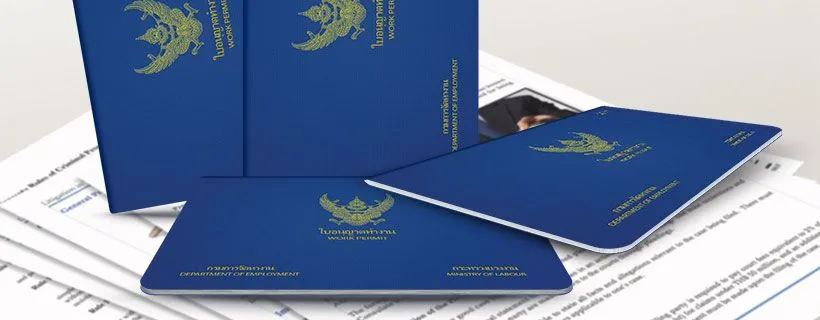
A Thai work permit is a legal authorization issued by the Thai government allowing a foreign national to work lawfully in Thailand. Under Thai law, any foreigner engaging in employment or providing services within Thailand—whether paid or unpaid—must generally obtain a valid work permit before commencing work. This requirement applies to employees, company directors, consultants, and even individuals performing professional services on a short-term basis.
Because Thailand maintains strict controls over foreign employment, work permits are regulated through a detailed legal framework involving immigration law, labor law, and corporate compliance rules. Employers and foreign employees must meet financial, staffing, and documentation requirements, and failure to comply can result in serious penalties, including deportation and criminal liability.
This article provides an in-depth and detailed analysis of the Thai work permit system, including its legal foundation, eligibility rules, application process, renewal procedures, restricted occupations, and key compliance strategies.
Legal Framework Governing Work Permits in Thailand
Work permits in Thailand are governed primarily by the Alien Employment Act Thailand, which regulates the employment of foreign nationals and defines the conditions under which foreigners may work in Thailand.
The main government authorities involved include:
- Department of Employment Thailand – responsible for issuing and managing work permits
- Ministry of Labour Thailand – supervising authority for employment regulation
- Thai Immigration Bureau – responsible for visas, entry permission, and extensions of stay
Foreign employment compliance is therefore a combined legal issue involving both the Ministry of Labour and Immigration Bureau.
What Is Considered “Work” Under Thai Law?
Thailand interprets the term “work” broadly. A foreign national may be considered to be working if they perform any activity that involves:
- physical labor
- intellectual work
- professional services
- management or administrative functions
- consulting or advising
- business operations
Even if the foreigner is not receiving compensation, performing services in Thailand may still require a work permit. This broad interpretation is one reason why foreigners often unknowingly violate Thai labor law.
Relationship Between Work Permit and Visa
A work permit is not a visa. Foreign nationals typically require both:
- A valid Non-Immigrant Visa, usually a Non-Immigrant “B” visa (Business Visa)
- A valid work permit, authorizing employment
A foreigner cannot legally work in Thailand simply because they hold a long-stay visa. Likewise, a work permit is usually issued only after the applicant has entered Thailand with the proper visa status.
In most cases, the standard sequence is:
- obtain Non-Immigrant “B” visa
- enter Thailand
- apply for work permit
- apply for one-year extension of stay based on employment
Employer Eligibility Requirements
To sponsor a foreign work permit, the Thai employer must meet specific legal and financial criteria. Although requirements can vary depending on the business type and industry, typical standards include:
1. Registered Capital
A Thai company generally must have:
- THB 2 million registered capital per foreign employee
This amount may increase depending on the type of business activity or the foreigner’s job classification.
2. Thai Employee Ratio
Many companies are required to employ:
- 4 Thai employees per 1 foreign work permit holder
This ratio is frequently reviewed by authorities, especially during renewal.
3. Active Business Operations
Authorities may evaluate whether the company is genuinely operating by reviewing:
- VAT registration and tax filings
- corporate financial statements
- office lease agreements
- payroll records and social security filings
Companies that exist only “on paper” may not qualify to sponsor foreign employees.
Foreign Applicant Eligibility Requirements
The foreign applicant must generally demonstrate:
- a valid passport
- a valid Non-Immigrant visa
- educational qualifications relevant to the job
- professional experience aligned with the position
- no disqualifying criminal record
For regulated professions, additional licensing or professional certifications may be required.
Authorities often examine whether the foreign applicant’s background matches the position. If a company attempts to hire a foreigner into a role reserved for Thai nationals or lacking sufficient justification, the application may be denied.
Restricted Occupations for Foreigners
Thailand maintains a list of occupations reserved for Thai citizens. These restricted occupations commonly include:
- manual labor
- agriculture-related jobs
- street vending and small retail trading
- tour guiding
- hairdressing and beauty services
- certain forms of construction work
Foreign nationals cannot legally obtain work permits for these occupations. Employers must ensure that job titles and job descriptions comply with Thai labor restrictions.
Work Permit Application Process
Step 1: Prepare Employer Documents
The employer must provide corporate documents such as:
- company affidavit and registration certificate
- shareholder list
- VAT registration certificate
- financial statements
- tax filings and withholding tax records
- list of Thai employees and social security contributions
- office lease agreement and map location
Step 2: Prepare Employee Documents
The foreign employee must provide:
- passport copies
- visa entry stamp
- educational certificates and transcripts
- professional resume and reference letters
- medical certificate (issued in Thailand)
- passport photos
In some cases, foreign education documents may need to be legalized and translated.
Step 3: Submission to the Department of Employment
The work permit application is filed at the Department of Employment. Processing times vary, but approval often takes several business days, depending on the province and complexity.
Step 4: Work Permit Issuance
Once approved, the work permit is issued and contains key restrictions such as:
- employer name
- job title and job description
- workplace address
- validity period
The foreigner must comply strictly with these conditions.
Work Permit Restrictions and Legal Limitations
A Thai work permit is employer-specific and job-specific. The permit holder may only work:
- for the sponsoring employer
- in the approved role
- at the registered work location
If the foreigner works outside the approved scope, this may constitute illegal employment.
Common violations include:
- working at a branch office not listed in the permit
- performing duties beyond the job description
- working for another company, even temporarily
Work Permit Validity and Renewal
Work permits are commonly issued for:
- 3 months, 6 months, or 1 year
Most long-term work permits align with a one-year visa extension.
Renewal generally requires updated evidence of:
- company tax compliance
- Thai employee ratio compliance
- ongoing employment relationship
- continued salary payment and withholding tax records
Failure to maintain company compliance is one of the most common reasons renewals are rejected.
Termination, Resignation, and Cancellation Procedures
If a foreign employee resigns or is terminated, the work permit must be canceled. Employers are expected to notify authorities, and the foreigner may need to:
- leave Thailand
- convert visa status
- obtain a new employer sponsorship
Failure to cancel properly can lead to overstays and immigration violations.
Penalties for Working Without a Permit
For Foreign Workers
Penalties may include:
- fines
- imprisonment
- deportation
- blacklisting and entry bans
For Employers
Employers hiring illegal foreign workers may face:
- fines per foreign worker
- criminal liability
- business disruption through investigation or closure
Thai authorities increasingly enforce compliance, especially in regulated industries.
Special Work Permit Categories
Certain industries and business structures may qualify for special procedures:
1. BOI-Promoted Companies
Companies approved by the Thailand Board of Investment benefit from:
- simplified approval processes
- relaxed capital and staffing ratios
- access to one-stop service centers
2. Representative Offices and Regional Headquarters
Special corporate structures may allow foreign executives and specialists to obtain permits under specific legal conditions.
3. Urgent Work Permits
Short-term urgent work authorizations may be available for specialized technical assignments, although they are limited and closely regulated.
Compliance Best Practices
To maintain lawful status, employers and foreign employees should:
- ensure job titles and duties match work permit conditions
- maintain accurate payroll and tax records
- track renewal deadlines well in advance
- comply with 90-day immigration reporting
- avoid unregistered work locations
- ensure corporate compliance with Thai staffing and capital rules
Foreigners should also keep a copy of the work permit available at the workplace, as inspections may occur.
Conclusion
A Thai work permit is a mandatory legal requirement for most foreign nationals working in Thailand. Governed by the Alien Employment Act and enforced through the Department of Employment and Immigration Bureau, the system is strict and documentation-intensive. Employers must meet capital and staffing requirements, while foreign workers must demonstrate qualifications and comply with role-specific limitations.
The most important compliance principle is that foreigners must work only within the scope approved in their work permit, and companies must maintain proper tax and labor compliance to support renewals. With proper planning, accurate documentation, and legal oversight, foreign professionals and businesses can successfully obtain and maintain work authorization in Thailand while minimizing immigration and employment risks.
